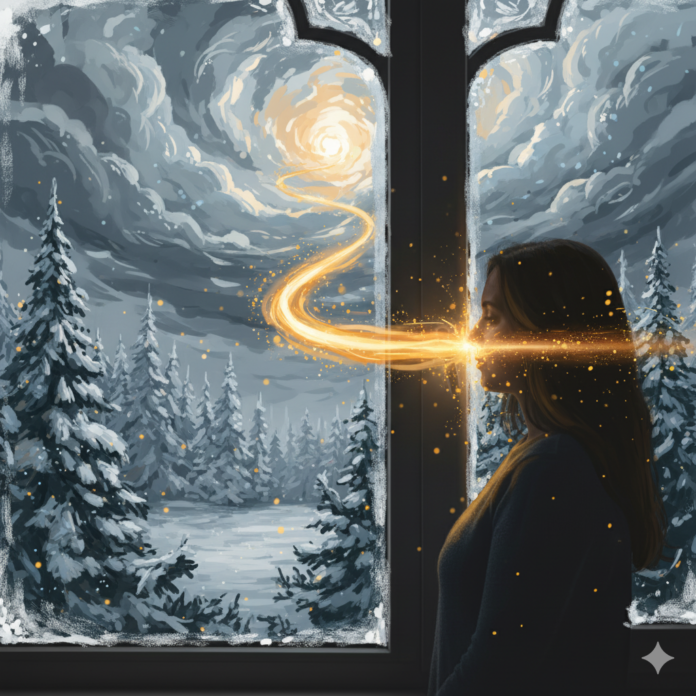

Winter Depression: When the Smile Fades with the Setting Sun
In summer, I’m all sunshine — cheerful, full of life, smiling at work, smiling on the bus, even smiling while eating. Everything feels warm, bright, and full of meaning.
Then September ends, the clouds arrive, the rain falls, and the temperature drops. Suddenly… my smile disappears. Darkness becomes my refuge, and life feels strangely empty. I start wondering: Why does everything feel so heavy? Why does my energy vanish when the weather changes?
That, dear reader, is how I stumbled upon something called Winter Depression, or more scientifically, Seasonal Affective Disorder (SAD) — yes, “SAD,” ironically the perfect acronym for “feeling sad.”

—

How It All Began ☀️➡️❄️
In the early 1980s, a South African psychiatrist named Dr. Norman Rosenthal moved to the northern United States.
In South Africa, he’d always been surrounded by sunlight and warmth. But in the northern winter — long nights, short days, and weeks with barely any sunshine — something inside him changed.
He lost motivation. His energy vanished. Everything he once loved felt meaningless. This inspired him to study the condition scientifically. In 1984, he published a paper introducing the term Seasonal Affective Disorder (SAD) and later wrote the book Winter Blues, which popularized the concept of winter depression.
—

The Five Symptoms — When the Summer You Fades and the Winter You Takes Over ❄️
1. Losing Passion and Motivation
I love writing. It’s my escape and my joy. But in winter, that joy disappears.
The same article that takes me two hours in summer might take eight in January. My motivation goes into hibernation, like a sleepy bear under a blanket of snow. 🐻❄️
2. Guilt and Overthinking
I start blaming myself for everything — for not replying to comments, for missing deadlines, even for my favorite football team losing a match.
It’s absurd, I know, but in those moments, I feel like I’m the one who missed the penalty kick! 🥅
3. Laziness and Excessive Sleep
The bed becomes your best friend — or maybe your captor.
It’s not tiredness, it’s more like… emotional gravity. You just can’t seem to get up. I sometimes feel like a polar bear entering hibernation — minus the fur, of course. 🫣🤣
4. Craving Food — Especially the Unhealthy Kind
When joy disappears, the brain goes looking for dopamine, the happiness chemical.
And where does it find it? In carbs, sugar, and comfort food. 🍕🍟
That’s when the “sweet hell loop” begins:
You eat because you’re sad, then feel sad because you ate too much… and eat again.
It’s a tragicomic cycle of carbs and self-loathing, really 😂.
5. Lack of Focus
To me, this is the most dangerous symptom.
Creativity needs energy — and winter drains it. Tasks that used to feel effortless suddenly become exhausting. You stare at the screen, type three sentences, then sigh for an hour.
It’s as if your creative battery has switched to low power mode, and every idea drains it further.
Normally, you recharge through social life, travel, and small joys — but in winter, those sources dry up. You start using your “emergency energy,” and that’s when burnout strikes.
—

What Really Happens in the Brain 🧠
Inside your brain is a small but powerful structure called the hypothalamus — your body’s “weather control center.” It regulates temperature, sleep, and hormones.
When sunlight disappears for long periods, the hypothalamus gets confused. It can’t tell if it’s day or night, and this causes chemical chaos:
It releases too much melatonin, the sleep hormone, making you feel sleepy all day.
It disrupts serotonin, the happiness hormone, leading to low mood.
It throws off your biological clock, so your body doesn’t know when to rest or be alert.
And let’s not forget vitamin D, the sunshine vitamin — your natural antidepressant.
Without sunlight, levels drop, causing mood swings, anxiety, fatigue, and weight changes (I’m definitely on the “weight gain” side of that equation 🤣🫣).
—

Why Some People Never Feel It 🌍
If you live near the equator, where sunlight stays constant year-round, lucky you — you’re less likely to experience SAD.
But for those of us farther north, genes may play a role too. Some studies suggest winter depression can run in families.
—

Then… How Do We Bring Back the Sun? 💡
1. Chase the Sunlight
Open those curtains wide!
Even 15 minutes of natural light daily — maybe with your morning coffee — helps reset your brain’s chemistry and regulate serotonin and melatonin levels.
2. Try Light Therapy
If real sunlight isn’t available, use light therapy lamps — special lamps that simulate sunlight.
They’re also used to treat some eye and skin conditions, and yes, they can lift your mood too.
3. Exercise Regularly
Physical movement releases endorphins, your brain’s natural antidepressant.
Even a simple 20-minute walk can do wonders.
4. Break the Routine
Do something different: cook a new recipe, meet a friend, take a short trip, or redecorate your space. Novelty tells your brain that life is still moving.
5. Talk About It
Conversations heal. Talking to a friend or therapist helps ease isolation — one of winter’s sneakiest traps.
—

Final Thoughts 🌤️
Remember — this condition is seasonal and temporary. You won’t feel like this forever.
Winter may take your sunlight for a while, but it can’t take your spark.
So, chase the light, warm your heart with laughter, and — if you can —
be the little ray of sunlight in someone else’s winter. ☀️
—
Written by Knowledge Corner ✍️



.)