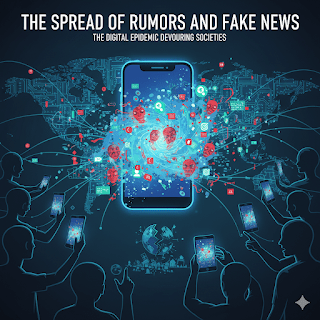
The Spread of Rumors and Fake News: The Digital Epidemic Devouring Societies

In an age where smartphone screens have become windows to the world, we are surrounded by an endless flood of information that flows without pause. Yet hidden within this flood lies a silent digital epidemic — the epidemic of rumors and fake news.

In mere moments, a person’s reputation can be destroyed, a family’s stability shattered, or an economy destabilized — all because of a misleading post on social media.
How did these platforms turn into arenas of deception? And how can we protect ourselves from this growing digital threat?

Why Do Rumors and Fake News Spread?
To understand the causes behind the spread of false information, we must explore the motives of those who share it — psychological, economic, and political alike.
1. The Search for Importance
Many individuals share fake news in a quest for attention or a sense of importance.
During the COVID-19 pandemic, for example, false “cures” such as ingesting toxic substances or veterinary drugs went viral — spread by users seeking digital fame.
2. Political and Social Agendas
At times, rumors become tools of political manipulation to influence public opinion.
Example: The 2016 “Pizzagate” conspiracy in the United States, which falsely accused politicians of running a criminal network, ultimately led to an armed attack on an innocent restaurant.
3. Economic Motives
In today’s attention-driven economy, clickbait is currency.
YouTube channels and websites spread false reports about celebrity deaths or illnesses (like Taylor Swift or Will Smith) to attract traffic and earn advertising revenue.

Media Manipulation: When Rumors Become a Weapon of War
Rumors are no longer a random social behavior — they have become strategic weapons in information warfare.
Some governments, such as Israel through its media apparatus, have launched organized misinformation campaigns — a clear example of systematic media deception.
Reversing Reality: Framing attacks on civilians in Gaza as “self-defense” and spreading claims about “tunnels under hospitals” to justify atrocities.
Emotional Manipulation: Presenting itself as a “small, besieged victim,” while ignoring decades of occupation and systemic violence.
Creating Foundational Myths: Slogans like “A land without a people for a people without a land” were crafted to deny Palestinian existence and rewrite history.
Such examples demonstrate how disinformation can be used to distort collective consciousness and legitimize injustice.

The Digital Environment: A Fertile Ground for Misinformation
1. Unprecedented Speed
What once took weeks to spread now takes seconds on platforms like WhatsApp, X (Twitter), and TikTok.
A single false post about an “explosion” or “attack” can cause mass panic before authorities even verify the facts.
2. Shallow Reading Habits
Most users read only headlines without verifying details — making them easy prey for doctored images or fabricated videos designed to provoke emotion.
3. Digital Echo Chambers
Social media algorithms surround users with content that reinforces their beliefs, making them more likely to accept false information that aligns with their views.

The Consequences of Rumors and Fake News
On the Individual Level
In India, false WhatsApp messages about “child kidnappers” led to the lynching of innocent people.
In the West, conspiracy theories have damaged the reputations and mental health of public figures and artists.
On the Family Level
Rumors of infidelity or divorce on Facebook and Instagram can destroy marriages and sow distrust within families.
On the Economic Level
During the COVID-19 pandemic, fake news claiming that drinking methanol could cure the virus caused hundreds of deaths in Iran.
In some countries, false rumors about banks triggered financial panic and massive withdrawals.

How to Combat Rumors and Fake News
1. Individual Responsibility
Follow the rule of Pause, Think, Verify:
Pause: Don’t rush to share any post.
Think: Who published it? What’s their motive? Does it make sense?
Verify: Use fact-checking tools like Google Reverse Image Search, Snopes, or PolitiFact before believing or sharing.
2. Family and Educational Awareness
Teach children that not everything they see on TikTok or Instagram is true.
Media literacy is the vaccine against misinformation.
3. Community and Government Action
Support digital awareness campaigns, encourage platforms to flag false content, and enforce laws against deliberate disinformation that harms individuals or society.
⭐⭐⭐⭐⭐
The fight against rumors and fake news is not solely a governmental duty — it is a collective moral responsibility.
Each time we verify information before sharing it, we contribute to protecting our communities from deception.
Let us
be the barrier where lies stop and truth begins.
Remember: the “Share” button can either destroy a life — or save one.
✍🏻 Written by Anas