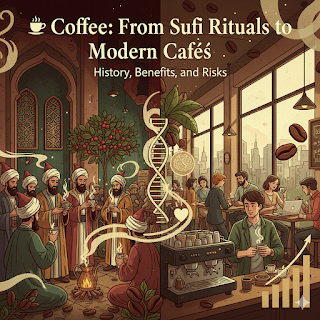
☕ Coffee: From Sufi Rituals to Modern Cafés | History, Benefits, and Risks

Introduction: More Than Just a Drink

Coffee is the most consumed beverage in the world after water, and it goes far beyond being a daily habit — it’s a global cultural and scientific phenomenon. From its mysterious discovery in Africa to its presence in today’s modern cafés, coffee tells a story of human curiosity, science, and social evolution.
In this article, we’ll explore the history of coffee, its health benefits and risks, and its cultural and economic impact throughout history.
–

🌿 The Origins of Coffee: A Legend from Ethiopia
The story of coffee begins in the highlands of Ethiopia, where legend says a shepherd named Kaldi noticed his goats becoming unusually energetic after eating red berries from a certain tree. When he tried them himself, he felt a sudden burst of energy.
Monks later used the berries to stay awake during night prayers, and the beans eventually reached Yemen, where Sufi mystics brewed the first form of coffee to aid in spiritual focus. By the 15th century, Yemen became the birthplace of Arabica coffee cultivation, spreading to Mecca, Cairo, and Istanbul — marking the start of its global journey.
–

🌍 From the Arab World to Europe: The Global Journey of Coffee
Through Red Sea traders, coffee spread from Arabia to Italy, France, and England during the 17th century.
Although some European clergy condemned it as “the devil’s drink,” coffee soon became a symbol of intellectual enlightenment. Coffeehouses in London and Paris turned into meeting places for philosophers, writers, and merchants.
London’s famous Lloyd’s Coffee House became the seed of modern insurance and stock exchange institutions, while Parisian cafés nurtured intellectual figures like Jean-Paul Sartre and Simone de Beauvoir.
–

🔬 The Science of Coffee: What Happens in Your Cup?
Coffee contains over 800 chemical compounds that contribute to its aroma and flavor.
The key component, caffeine, is a natural stimulant that blocks adenosine receptors in the brain, reducing fatigue and increasing alertness and focus.
During roasting, complex thermal reactions such as the Maillard reaction transform the green beans into the rich brown color and flavor profile we associate with coffee.
–

☕ Health Benefits of Coffee (Scientifically Proven)
Modern research confirms that moderate coffee consumption offers numerous health benefits, including:
1. Improved focus and mental alertness:
Caffeine stimulates the central nervous system, enhancing concentration and cognitive performance.
2. Rich in antioxidants:
Coffee contains polyphenols and chlorogenic acid, which fight inflammation and neutralize free radicals.
3. Reduced risk of diabetes and liver disease:
Studies show that regular coffee drinkers are less likely to develop type 2 diabetes and liver cirrhosis.
4. Mood enhancement:
Caffeine increases the production of dopamine and serotonin, reducing depression risk and boosting mood.
5. Boosts metabolism:
Caffeine helps slightly increase fat burning, especially when combined with physical activity.
> ✅ Tip: The ideal intake is 2–3 cups per day, preferably without excessive sugar or cream.

⚠️ Health Risks and Side Effects of Excessive Coffee Consumption
Despite its benefits, drinking too much coffee can cause health problems. Key risks include:
1. Insomnia and sleep disturbances due to overstimulation of the nervous system.
2. Increased heart rate and blood pressure in caffeine-sensitive individuals.
3. Anxiety and nervousness from elevated adrenaline levels.
4. Stomach irritation and acidity caused by increased gastric acid production.
5. Mild dependence or withdrawal symptoms, such as headaches or fatigue when stopping abruptly.
> 🚫 It’s best to limit coffee intake during pregnancy, and for people with heart disease or chronic anxiety.

☕ Coffee Culture: From Sufi Circles to Modern Workspaces
Throughout history, coffeehouses have played a vital social and intellectual role.
In the Islamic world, they were hubs for poetry, debate, and learning.
In Europe, they became intellectual salons that fueled art, philosophy, and science.
Today, cafés serve as spaces for creativity, work, and connection — especially with the rise of the Third Wave Coffee Movement, which emphasizes quality, sustainability, and artisanal brewing.

🌱 The Global Coffee Economy
Coffee is the second most traded commodity in the world after oil, providing income for over 25 million farmers across Africa, Latin America, and Asia.
The concept of Fair Trade Coffee supports small-scale farmers and promotes environmental sustainability.
However, the industry faces growing challenges due to climate change and crop diseases, which threaten both yield and quality.

💬 Conclusion: Coffee as a Bridge Between Civilizations
From Sufi rituals to the hum of modern cafés, coffee remains a universal symbol of human connection.
It embodies the intersection of culture, science, and art — linking people across continents and generations.
With every sip, we taste not just a beverage but centuries of human discovery and exchange. Coffee, indeed, is a global language that needs no translation.
✍🏻 Written by Anas