Useful Summary
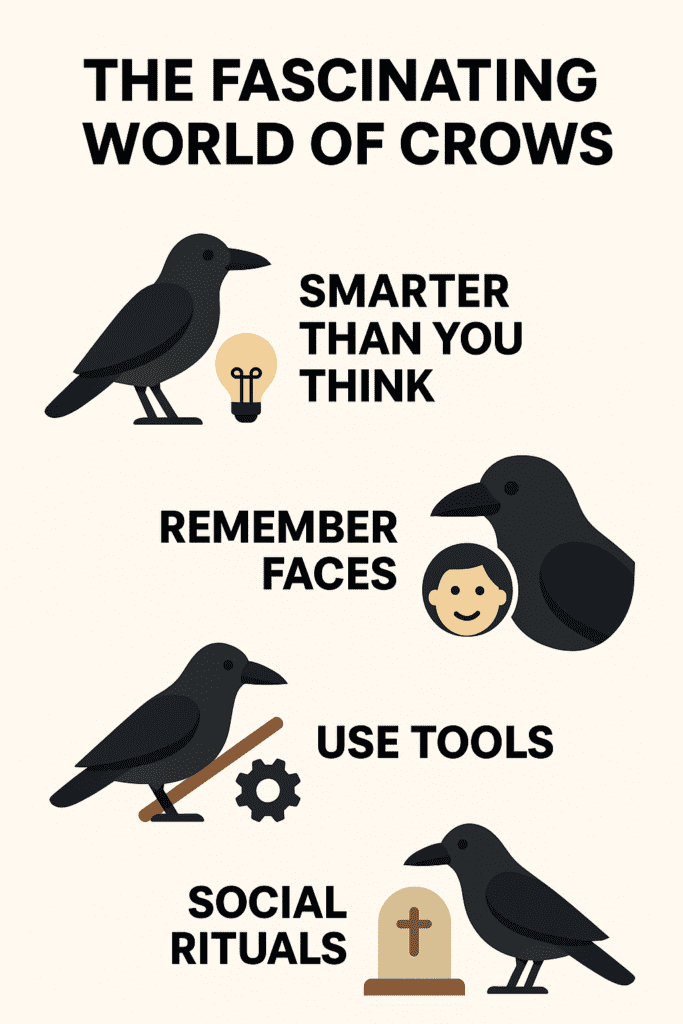
Crows are not just ordinary birds. They remember faces, solve complex problems, cooperate in family units, show empathy, and even plan for the future. What might look like random behavior is actually a display of intelligence and social awareness that rivals many mammals.
An Unexpected Encounter
One afternoon, while walking through the city streets, I felt a sharp strike on my head. I looked around—no one was there. Moments later, it happened again. That’s when I noticed the shadow of a bird swooping toward me. It was a crow—apparently angry at me for stealing a shiny coin near its nest.
This bizarre incident sparked my curiosity. Why did this bird behave so differently from others? Why did it remember me? My research led me into the astonishing world of crow intelligence.
🧠 Crows Remember Faces
In 2011, researchers at the University of Washington, led by John Marzluff, discovered that crows can recognize and remember human faces. His team tested this with two groups:
- Black-masked group considered ” dangerous ” they captured and handled some crows.
- White-masked group considered ” safe ” they interacted without harming the birds.
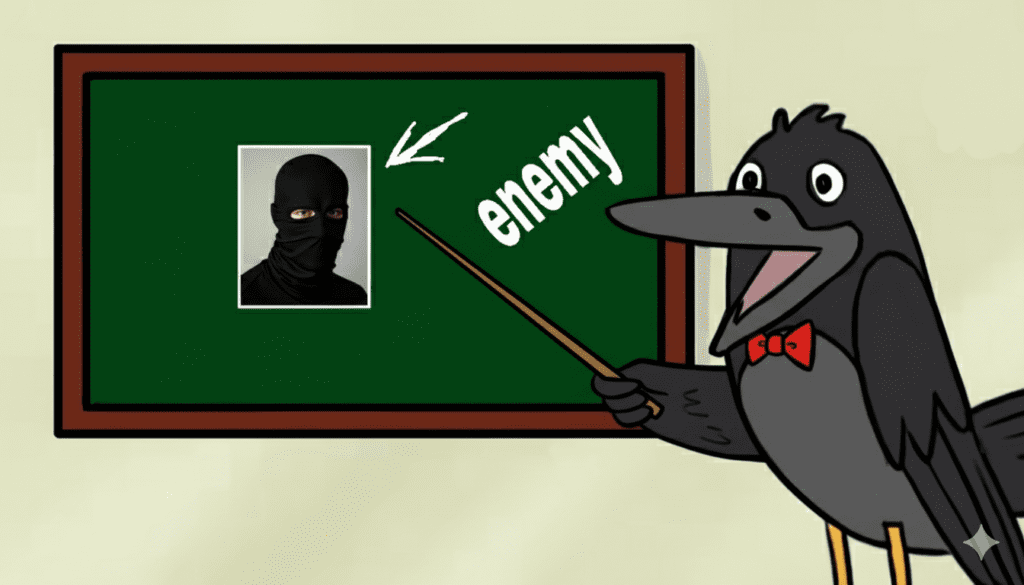
Months later, crows aggressively mobbed the black-masked researchers while ignoring the white-masked group. Remarkably, when the experiment was repeated two years later, more than 40 crows—including young ones who had never experienced the capture—joined in. Clearly, knowledge was passed socially.
👨👩👧 Crow Society: United They Stand
Crows have surprisingly complex social structures:
- Young crows assist in raising their siblings.
- They show loyalty and responsibility toward their families.
- They cooperate to solve problems and defend territory.
Studies show crows can solve puzzles comparable to a 7-year-old child. They drop stones into water to raise the level and use tools to access food. Some have even learned to exploit urban environments cleverly, like dropping nuts on crosswalks and retrieving them safely.
🧪 Delayed Gratification: Marshmallows and Crows
Inspired by the famous Stanford marshmallow experiment, researcher Friederike Hillemann tested crows’ self-control in 2014. Birds were offered immediate food or a superior reward if they waited. Initially, most grabbed the immediate option. But over time, nearly all learned to wait for the better reward.
This demonstrates that crows can plan for the future, control impulses, and make strategic decisions—abilities we often underestimate in birds.
⚰️ Crow Funerals and Empathy
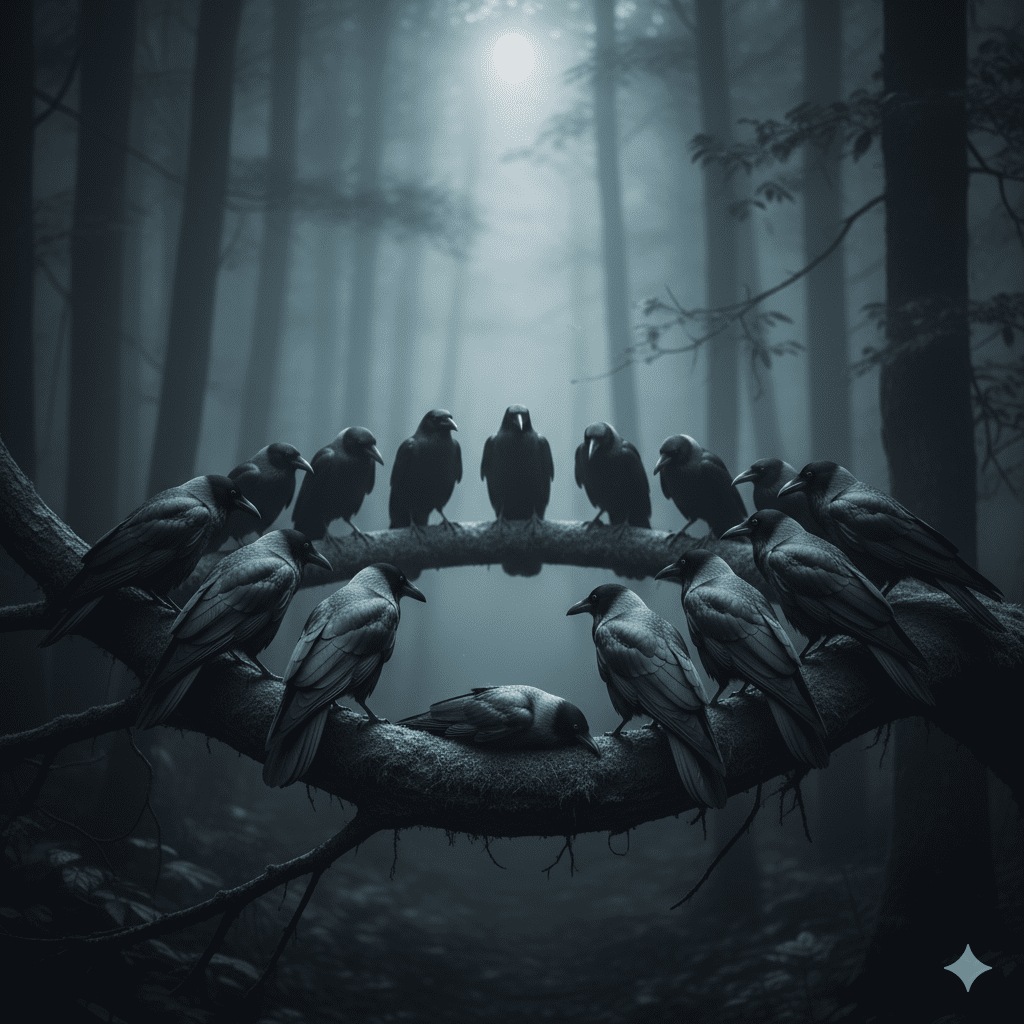
Crows exhibit what appears to be mourning behavior. When a flock member dies, others gather, cawing loudly. Some even assist ailing members in a form of “mercy goodbye.”
Such behaviors suggest a level of social and emotional awareness rarely seen outside mammals.
🎁 Gifts and Gratitude
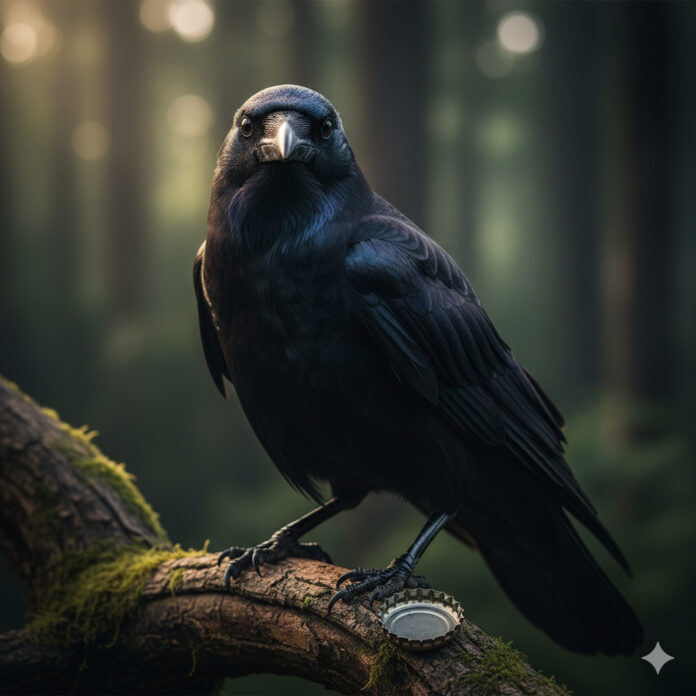
Crows remember kindness as well as harm. People who feed or care for them often receive small “gifts” in return—from bottle caps to coins or rings. This indicates not only memory but also an understanding of reciprocity.
🗣️ Language and Culture
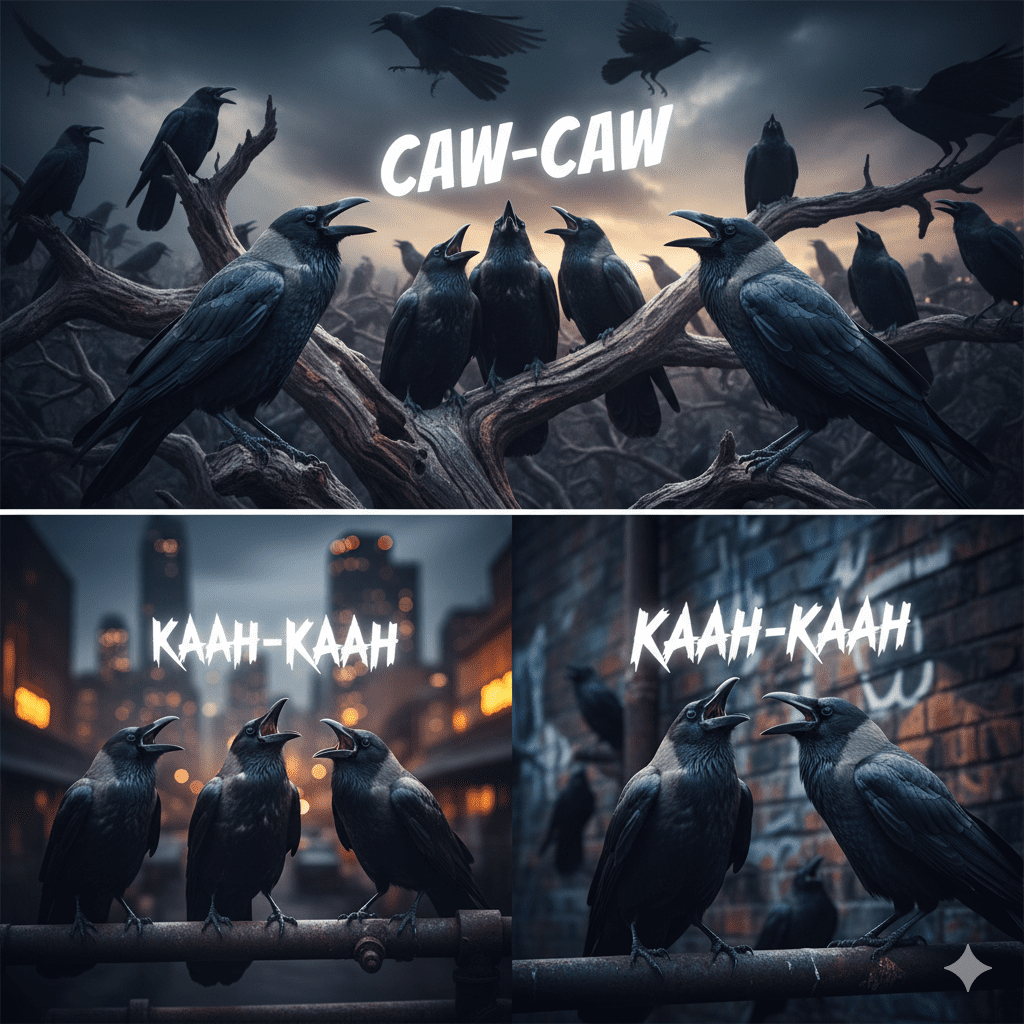
Crows have regional dialects and can mimic sounds, including human speech, under certain conditions. A crow moving to a new area often adopts local calls, showing cultural transmission of communication methods.
Historical Perspective
Throughout history, humans have underestimated birds’ intelligence. From mythological associations to superstitions, crows were often seen as omens or pests. Modern research flips this narrative: these birds are not only aware of their environment but also socially complex and adaptive. The studies by Marzluff and Hillemann are milestones in uncovering a previously hidden layer of avian intelligence.
What This Means for Observers
For the everyday person, this means that encounters with crows are more than chance. When a crow watches you, remembers your actions, or responds socially, it is engaging in cognition we often reserve for humans. Observing their behavior can teach us patience, foresight, and the value of social cooperation—lessons often overlooked in our fast-paced lives.
🧩 Final Thoughts
Crows are thinkers, planners, problem-solvers, and social creatures. My personal encounter with a crow taught me to pay attention: a seemingly ordinary bird can hold extraordinary intelligence.
Looking forward, as urban ecosystems expand, we may see crows adapt even further, potentially leading to deeper interactions between humans and these remarkable birds. Respect, awareness, and observation could turn everyday encounters into fascinating lessons about memory, strategy, and social intelligence.
✍️ Written by: Mohamed
Frequently Asked Questions ❓️
Yes, studies show that crows can recognize and remember human faces for years, especially if they associate them with danger or safety.
Crows are among the most intelligent animals. Their problem-solving abilities are often compared to those of young children.
Yes, crows can use tools, think ahead, and solve multi-step problems to obtain food or achieve goals.
Crows use a wide range of sounds and even have regional “dialects,” allowing them to communicate effectively within their groups.
This behavior is believed to serve both as a form of social response and a way to learn about potential dangers in their environment.