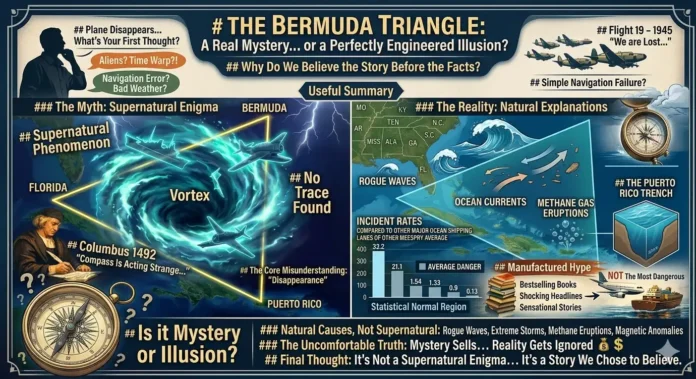
Useful Summary
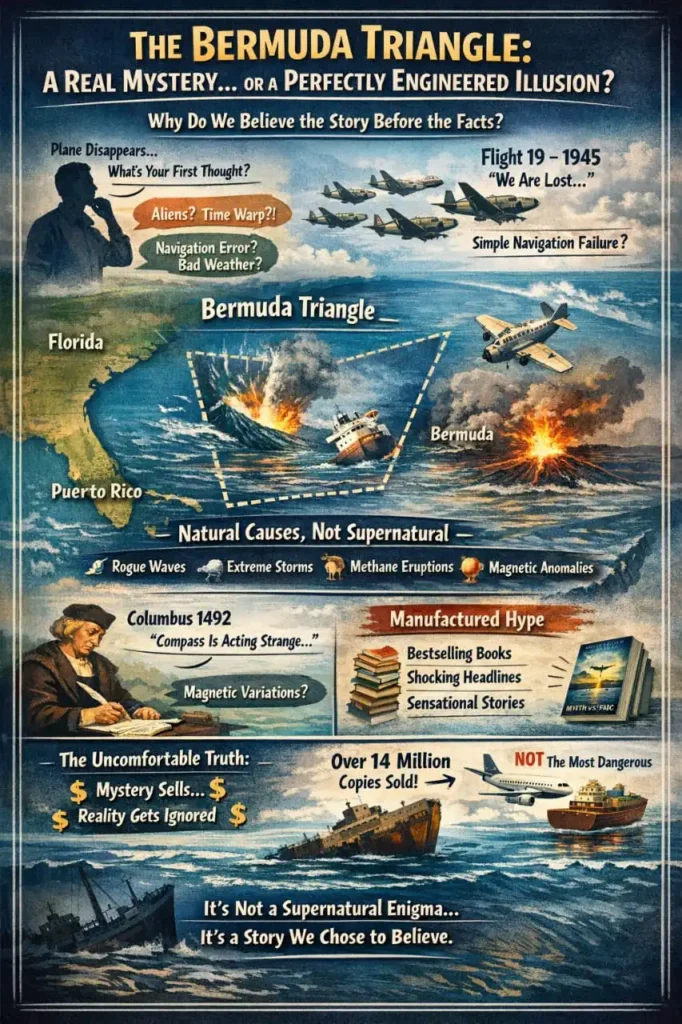
The Bermuda Triangle is not a supernatural phenomenon, but a region where real incidents occur under explainable conditions. The mystery was never in what happened… but in how those events were told, repeated, and amplified.
Introduction: Why Do We Believe the Story Before the Facts?
Let’s be honest for a moment.
If you hear that a plane disappeared in the ocean… what’s your first reaction?
Do you think about weather conditions and navigation errors?
Or does your mind immediately jump to something… strange?
This is where the real story begins.
We don’t naturally look for the most accurate explanation.
We look for the most interesting one.
And that’s exactly how myths are born.
This is not unique to the Bermuda Triangle.
If you want to understand this behavior more deeply, read this analysis:
[Why People Believe Fake Mysteries Online]
Flight 19: A Real Incident… With a Very Realistic Explanation
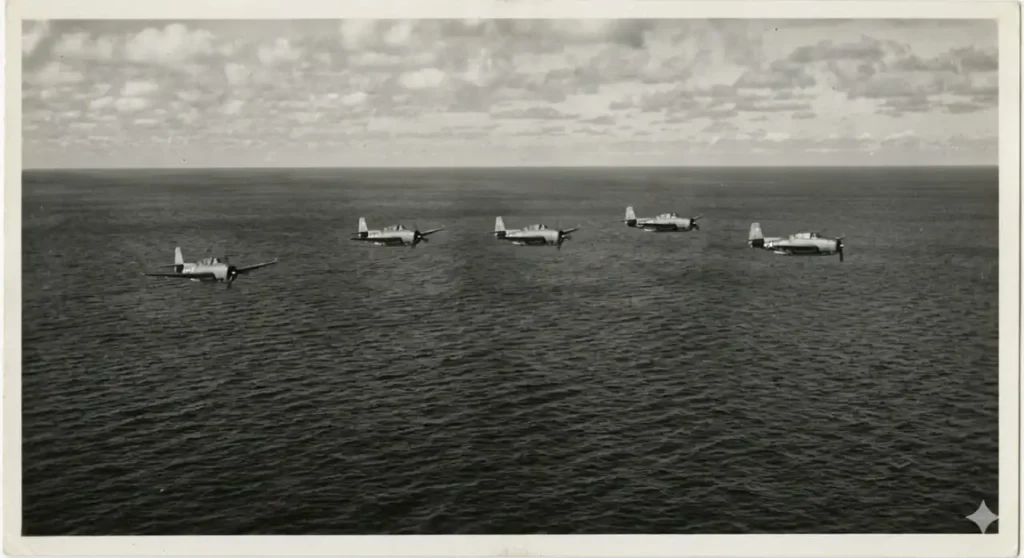
In 1945, five U.S. Navy training planes took off for what should have been a routine mission.
Then something went wrong.
- “The water looks strange…”
- “We don’t know where we are…”
Then silence.
All five planes disappeared. Fourteen crew members gone.
And when a rescue plane was sent… it also vanished.
Now stop here and ask the real question:
Is this proof of something supernatural?
Or are we looking at a situation where:
- Navigation systems were limited
- Pilots relied heavily on compasses
- Environmental conditions could easily disorient them
Because if that’s the case…
The mystery starts to shrink.
Centuries Earlier: When Christopher Columbus Noticed Something Unusual
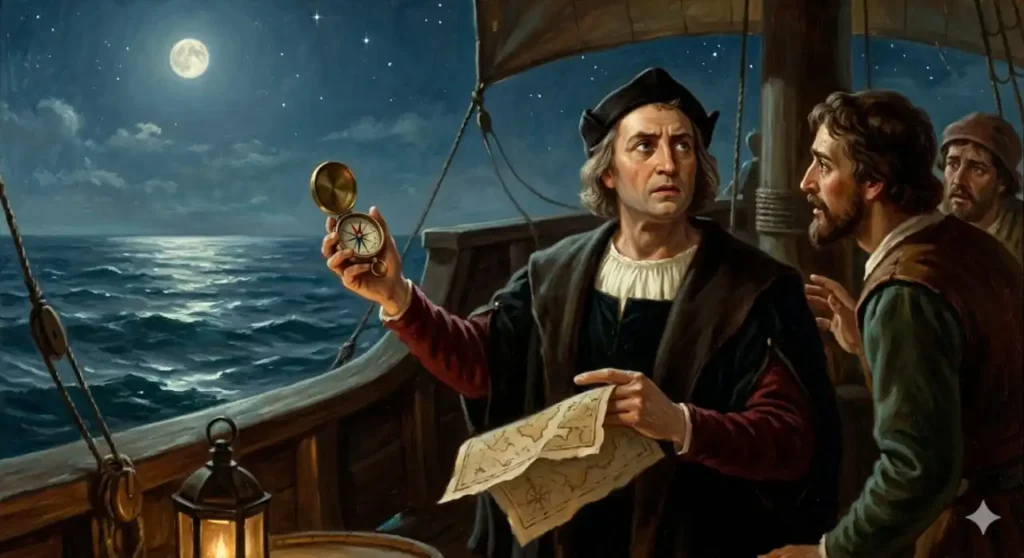
Back in 1492, Christopher Columbus recorded something strange.
His compass behaved unpredictably in that region.
Now here’s the important distinction:
Is that a mystery?
Or evidence that the Earth’s magnetic field is not perfectly stable?
The answer depends on one thing:
Are you looking for truth… or a story?
The Core Misunderstanding: “Disappearance”
People often say:
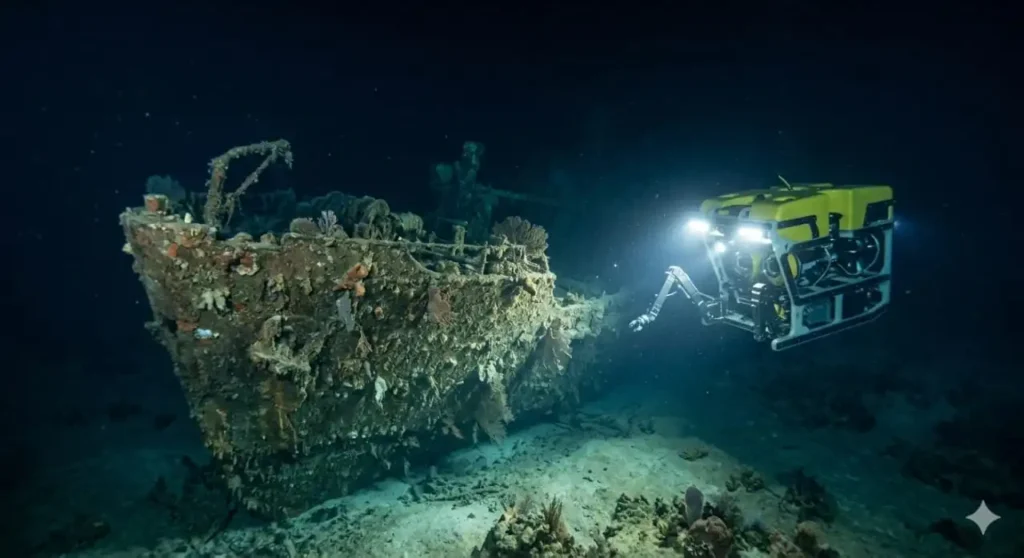
“Ships disappear without a trace.”
But let’s correct that:
Ships sink… and we fail to find them.
And that difference changes everything.
Let’s Break It Down: What Actually Happens There?
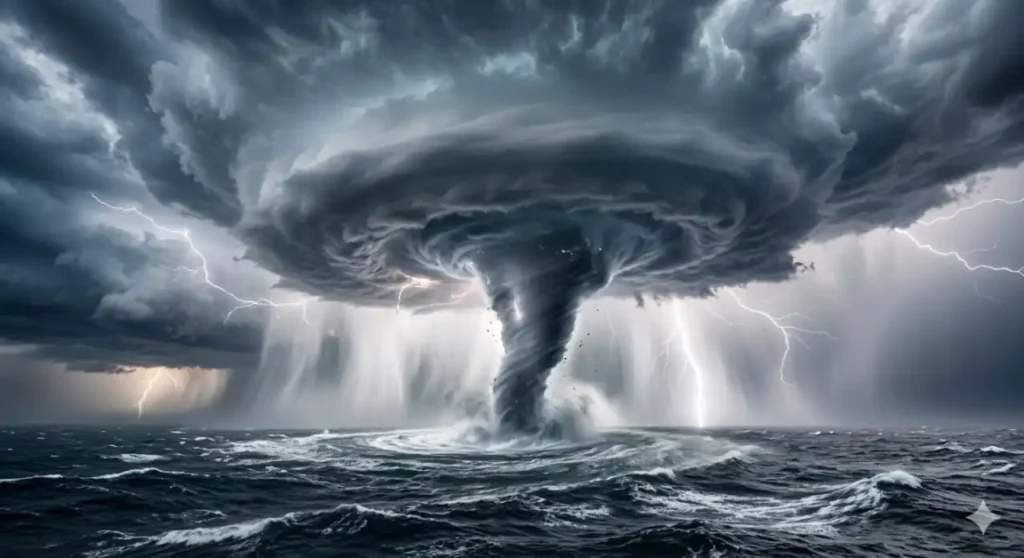
Extreme Weather Is More Than Enough
This region experiences:
- Waterspouts reaching 100 km/h
- Microbursts (sudden downward air blasts)
Imagine a small aircraft entering that unexpectedly.
Do you still need a “mystery” to explain the outcome?
Rogue Waves: Sudden and Destructive
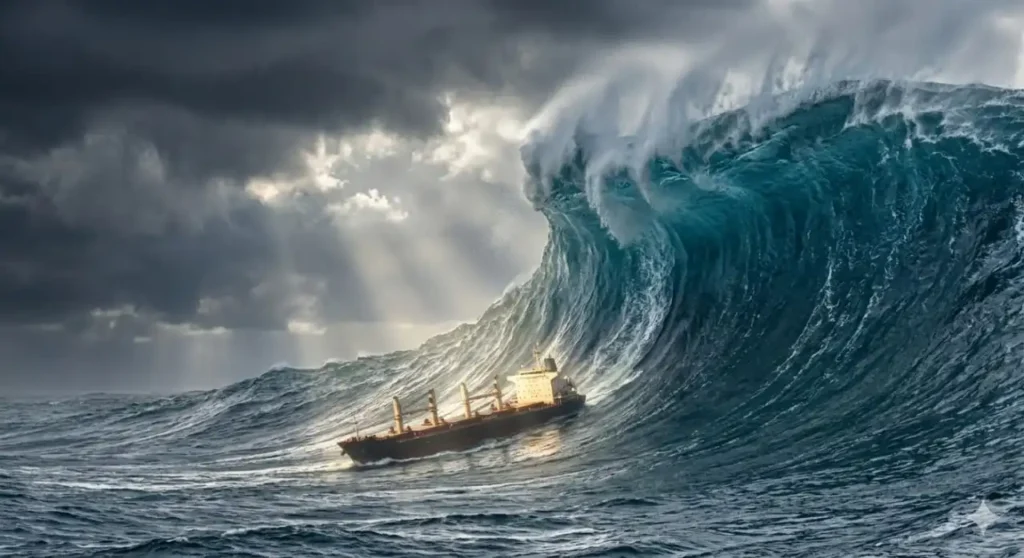
These are not normal waves.
They appear suddenly, rise unpredictably, and strike with enormous force.
They have been recorded and measured.
No mythology required.
The Puerto Rico Trench: Where Things Truly Disappear
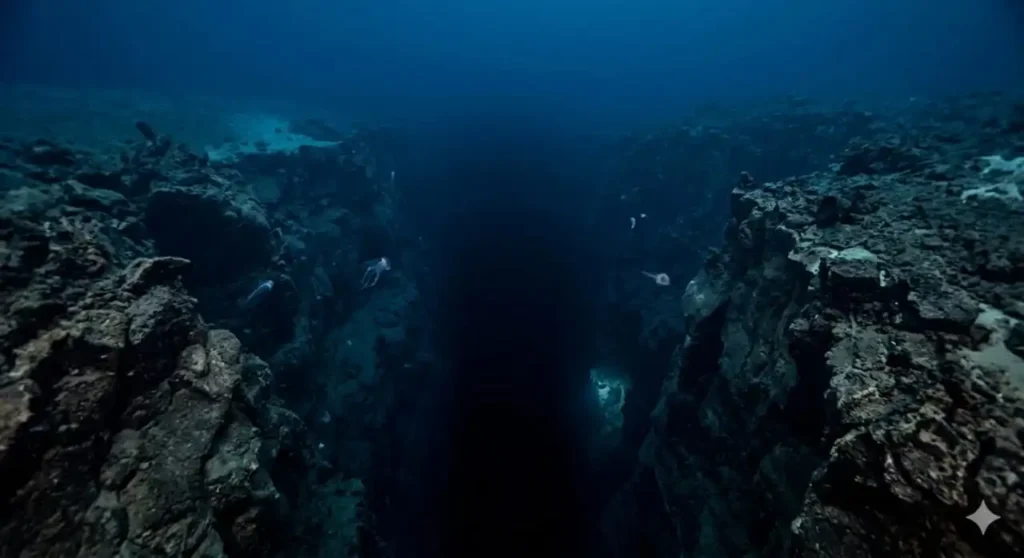
This trench reaches depths of about 8 kilometers.
Modern recovery equipment cannot fully access it.
So when wreckage falls there… it’s effectively gone.
Ocean Currents That Erase Evidence
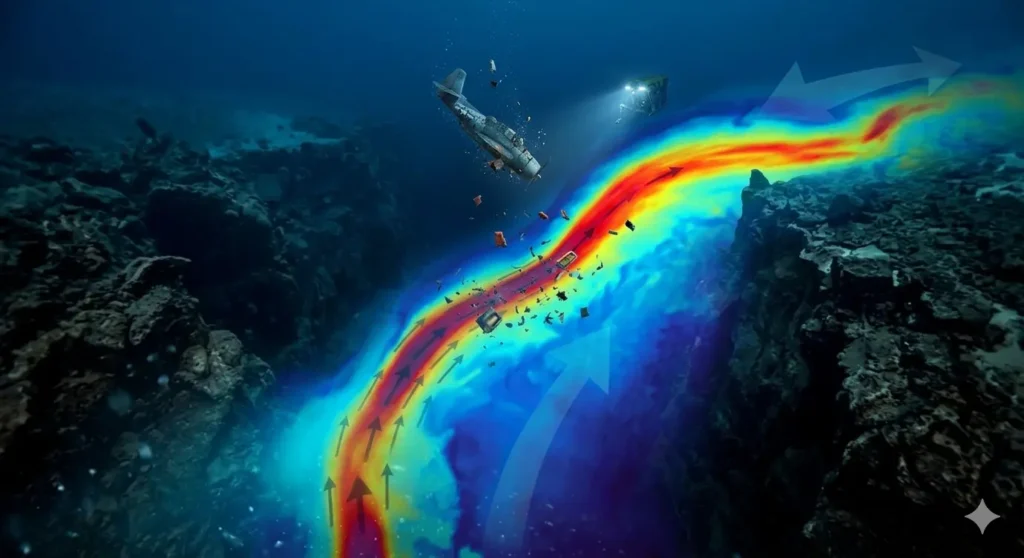
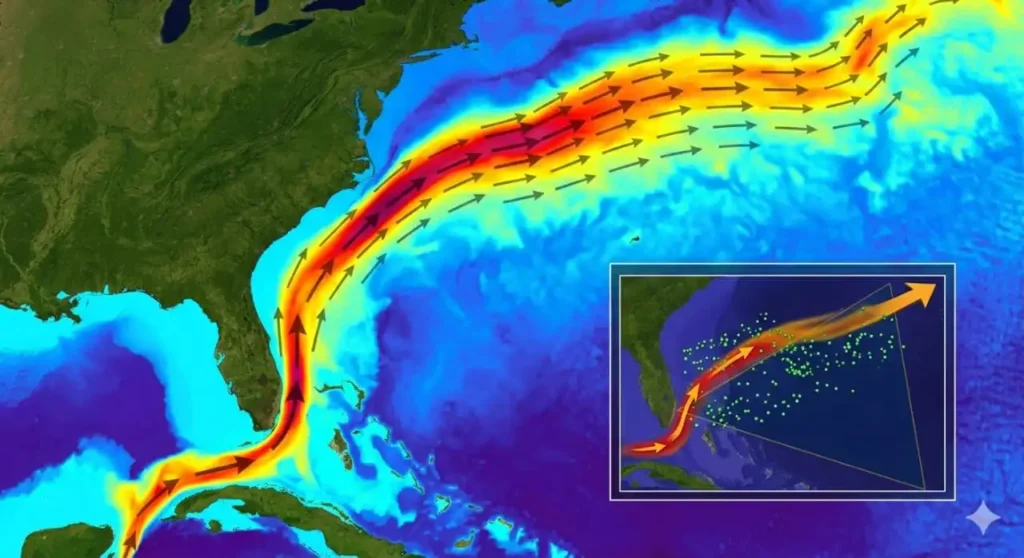
Strong currents like the Gulf Stream can move debris rapidly.
What disappears here today… could be thousands of kilometers away in days.
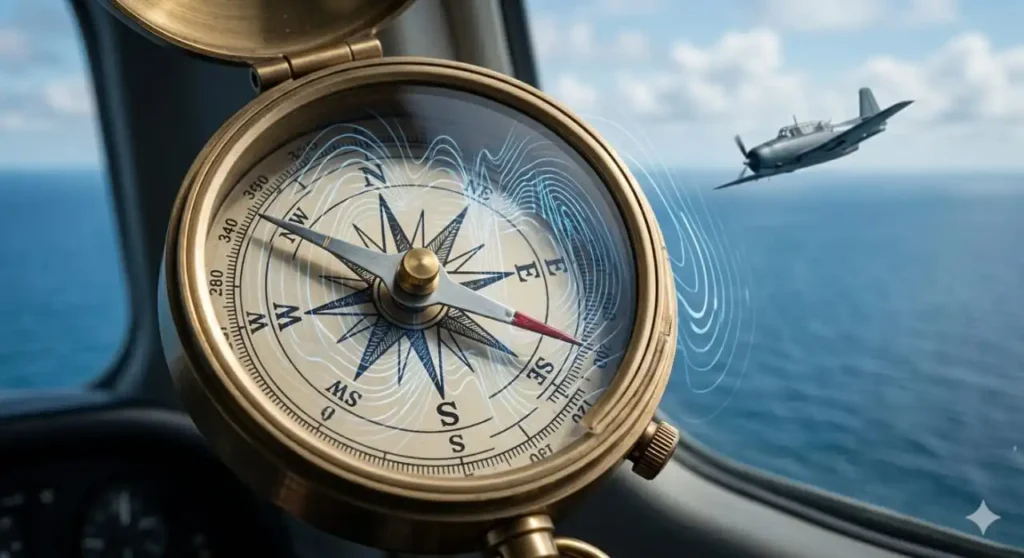
Magnetic Variations
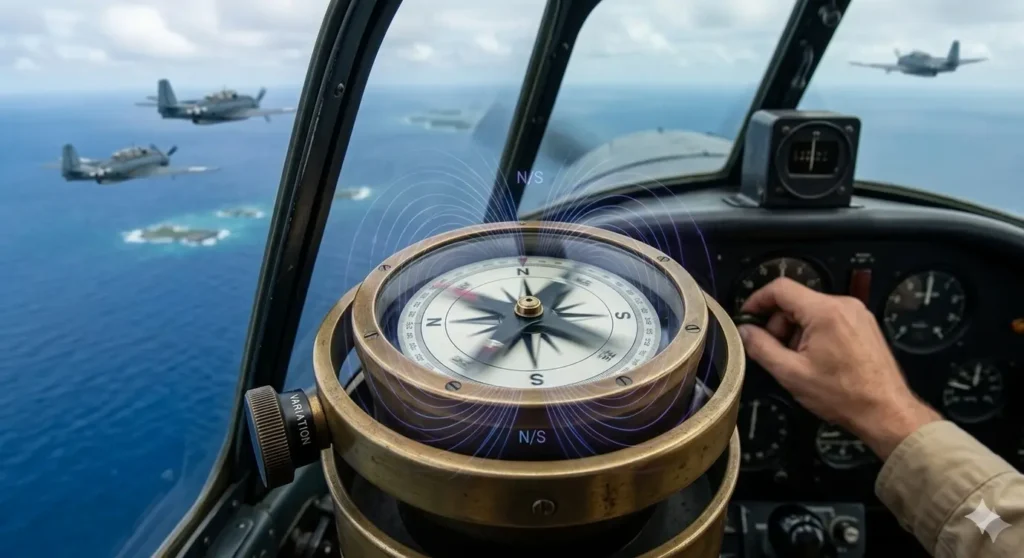
The Earth itself is a moving magnetic system.
In certain areas, compasses may behave inconsistently.
For a pilot relying on direction… that’s a serious problem.
Methane Gas Eruptions
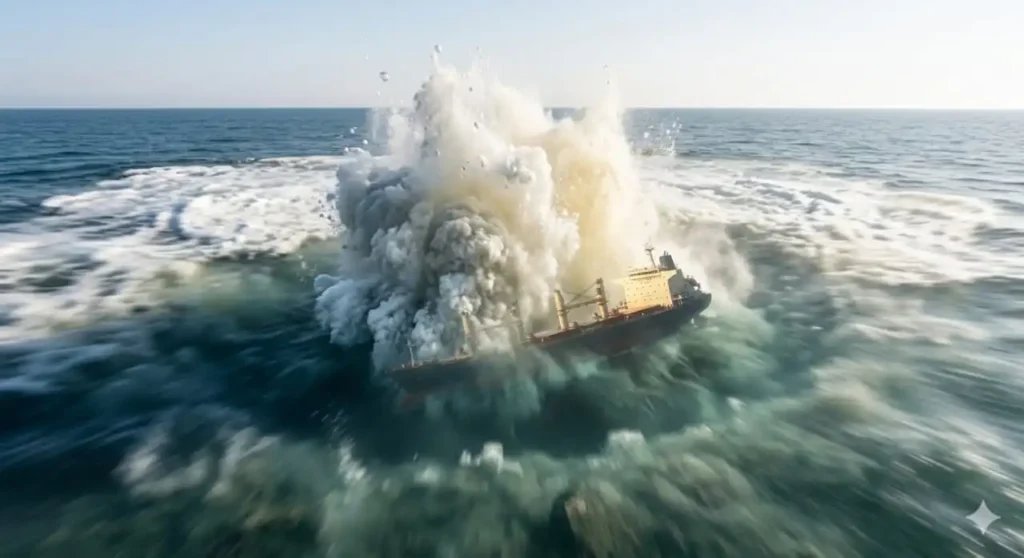
Gas trapped under the ocean floor can suddenly erupt.
This creates bubbles that reduce water density.
A ship doesn’t slowly sink.
It loses support instantly.
What Does This Mean for You as a Reader?
Here’s the uncomfortable truth:
You were never really confused by the events.
You were confused by how they were presented.
Media rarely says:
“A natural incident occurred.”
It says:
“A terrifying mystery unfolds.”
Why?
- Mystery gets attention
- Attention brings clicks
- Clicks generate profit
Why the Bermuda Triangle Became Famous
Not because it is the most dangerous region.
But because it was marketed that way.
In 1974, Charles Berlitz published a book that framed the area as a supernatural phenomenon.
The result?
- Over 14 million copies sold
- Global translations
- Endless media coverage
The Uncomfortable Reality
The Bermuda Triangle:
- Is not among the most dangerous regions
- Is crossed by planes daily
- Is treated normally by insurance companies
Statistically, other regions are more dangerous.
They just don’t have the same story.
Final Thought
The real mystery was never the ocean.
It was always how we chose to understand it.
❓ Frequently Asked Questions (FAQ)
Yes, the Bermuda Triangle is a geographically real area in the North Atlantic Ocean. However, the “mystery” surrounding it is considered a manufactured myth, as scientific data shows no unusual rate of disappearances compared to other heavily traveled maritime regions.
Official records from the U.S. Navy Historical Center attribute the loss of Flight 19 to human navigation errors and fuel exhaustion. Bad weather and a faulty compass led the pilots into the open ocean, far from their intended destination.
Several natural phenomena explain the incidents in the region:The Gulf Stream: A powerful ocean current that acts like a “shredder,” quickly carrying wreckage away from the site.Rogue Waves: Massive, sudden waves that can overwhelm even large cargo ships.Methane Gas Eruptions: Rare underwater gas releases that can reduce water density and affect buoyancy.The Puerto Rico Trench: One of the deepest points in the ocean, making wreckage recovery nearly impossible.
No. Insurance data from Lloyd’s of London consistently shows that the Bermuda Triangle is not statistically more dangerous than any other part of the ocean. Shipping companies are not charged higher premiums for traveling through the area.
The myth persists because “mystery sells.” Authors like Charles Berlitz and various media outlets popularized sensationalized versions of events to sell over 14 million books, often ignoring the boring but accurate scientific explanations.
📚 References & Resources
Official Scientific & Maritime Records
- National Oceanic and Atmospheric Administration (NOAA): What is the Bermuda Triangle? – Official confirmation that disappearance rates are normal for high-traffic zones.
- U.S. Navy Historical Center: The Loss of Flight 19 – Detailed records on the navigation errors and fuel exhaustion during the 1945 incident.
- U.S. Geological Survey (USGS): Gas Hydrates and the Bermuda Triangle – Scientific study on methane gas and its actual impact on sea buoyancy.
Investigative & Academic Research
- The Library of Congress: Bermuda Triangle – Research Guides – A historical overview of how the myth was constructed in 20th-century media.
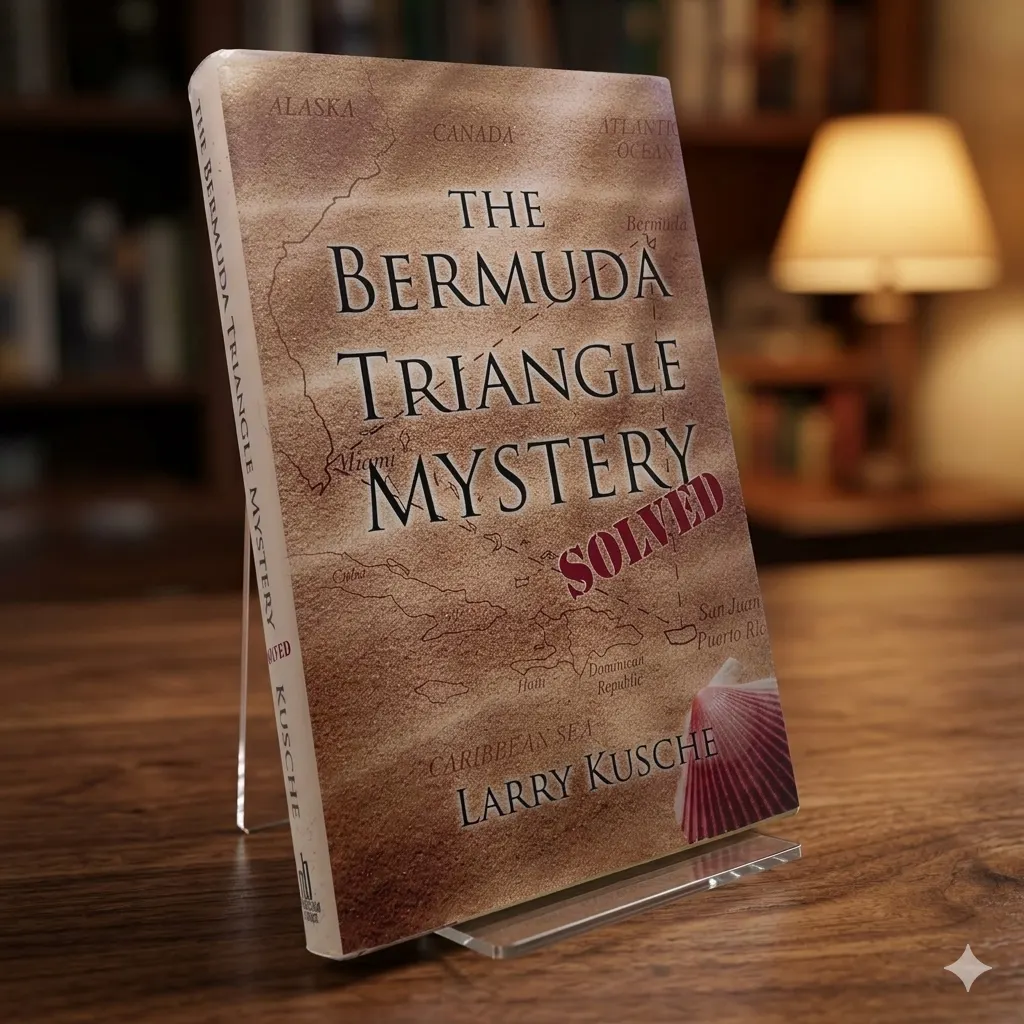
- Lawrence Kusche: The Bermuda Triangle Mystery – Solved (1975) – The definitive research debunking specific cases and storm misreporting.
Global Media & Logistics Data
- Britannica Encyclopedia: Bermuda Triangle | Description & Facts – Comprehensive summary of the region’s geography and debunking sensationalist claims.
- BBC Future: The Truth About the Bermuda Triangle – Analysis of the Gulf Stream’s role and human psychology regarding mysteries.
- Lloyd’s of London: Maritime safety reports confirming that the region is not classified as high-risk for insurance premiums.
Written by Muhammad ✍️