Useful Summary
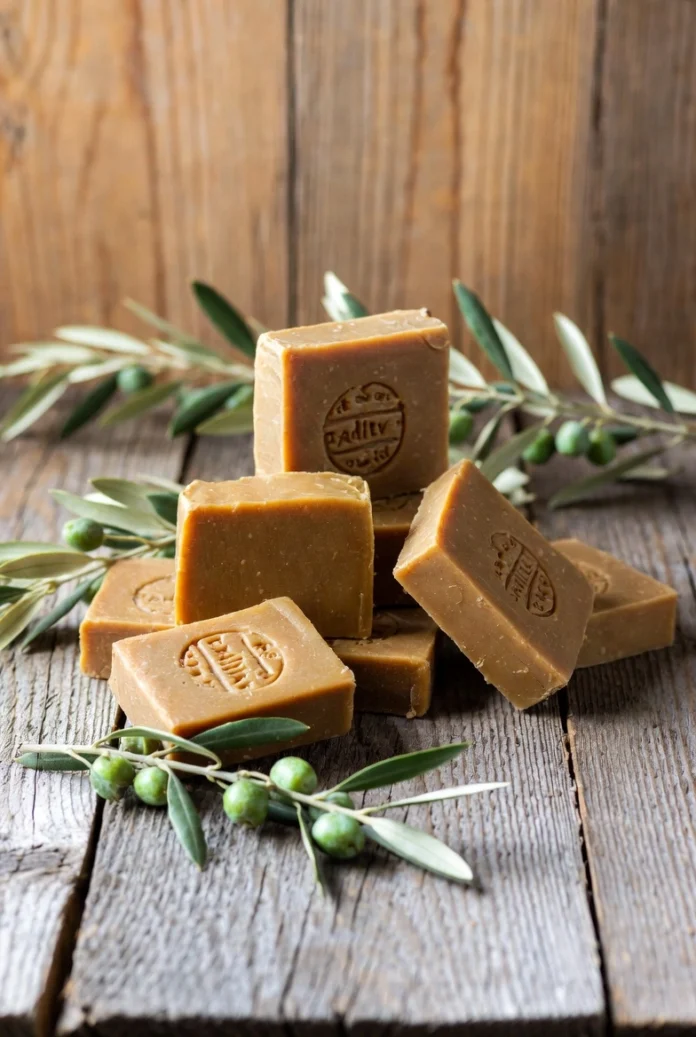
Aleppo laurel soap is not just an ancient product—it is a surviving industrial tradition that dates back over 2,000 years. It shaped early soap-making in Europe, endured wars and economic collapse, and still follows nearly identical production methods today. Yet despite its authenticity and historical depth, it never became a dominant global industry—largely due to cost, conflict, and resistance to industrial compromise.
Early Origins: When Laurel Was a Symbol Before It Became a Craft
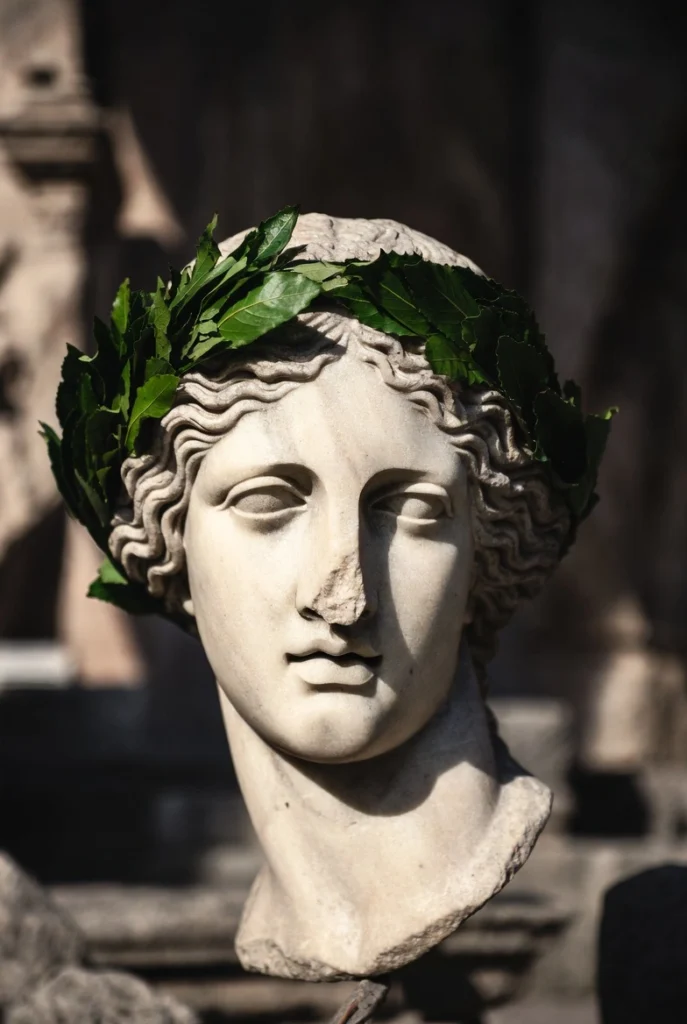
Before it entered soap-making, laurel held symbolic power. In ancient Greek and Roman cultures, it crowned victors and thinkers, representing authority, wisdom, and triumph.
But symbolism alone does not sustain a material tradition. Over time, practical observation took over—people recognized the plant’s aromatic and medicinal qualities. That shift—from symbol to utility—was the real beginning.
The Birth of Aleppo Soap: A Controlled Chemical Process, Not a Folk Accident
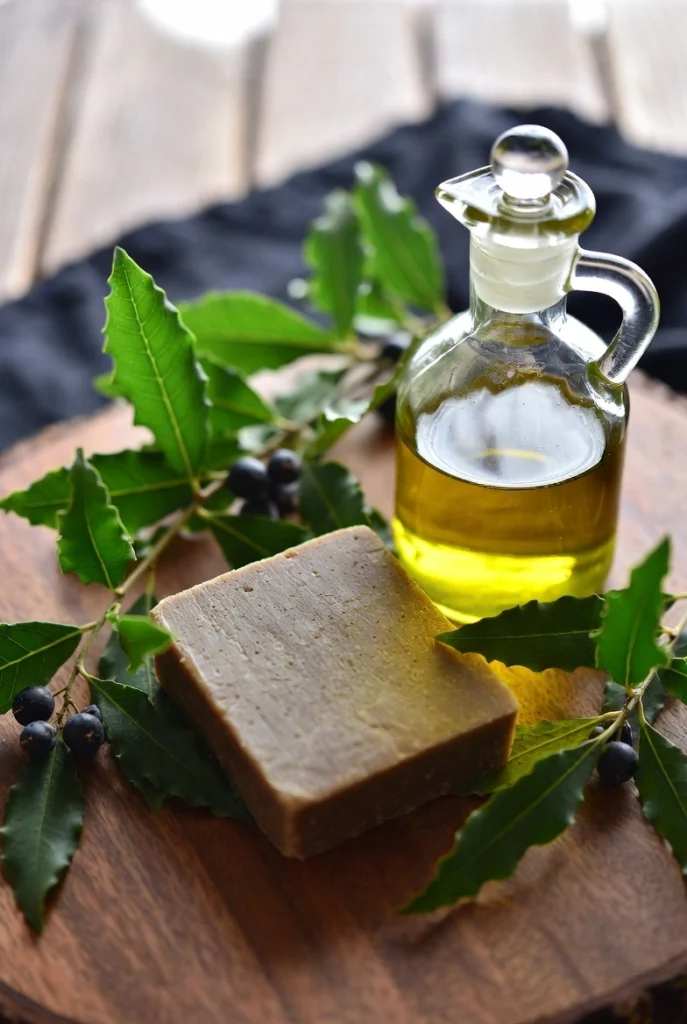
In Aleppo, one of the earliest structured soap-making systems emerged. This was not primitive guesswork—it was an early form of applied chemistry.
Core formula:
- Olive oil (base)
- Laurel oil (typically 20–30% for high-quality soap)
- Water
- Alkaline agent (historically derived from plant ash)
The traditional method (Hot Process):
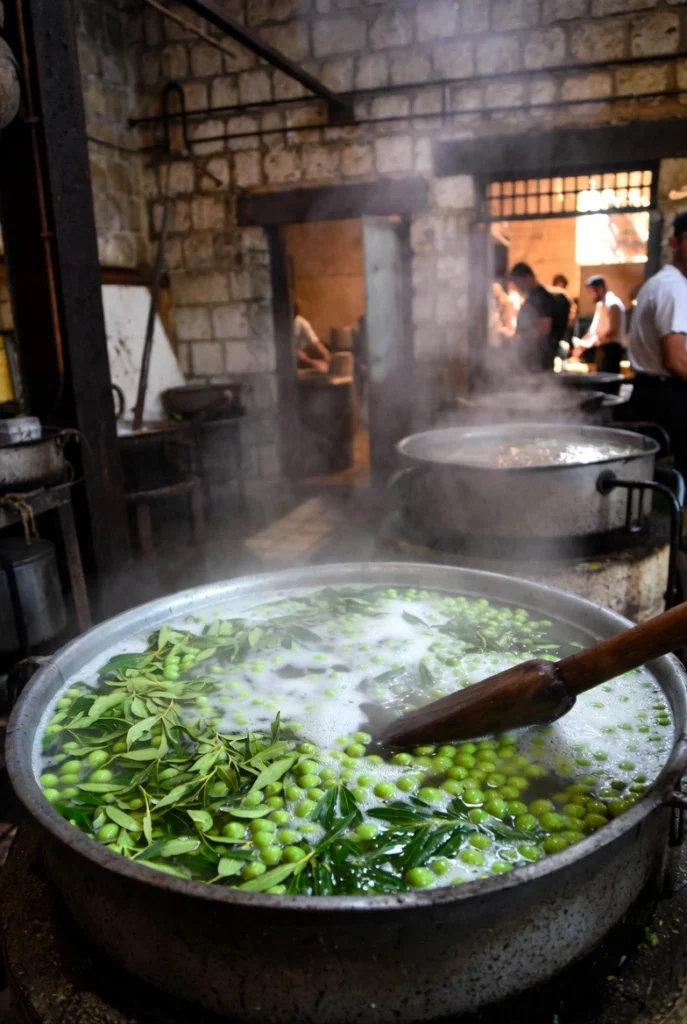
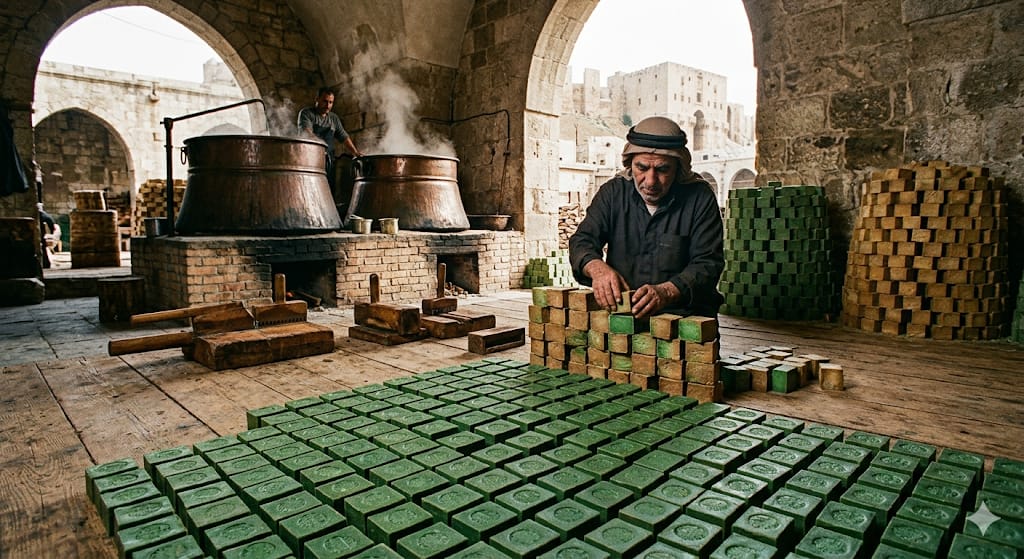
- Olive oil is boiled with the alkaline solution for several days
- Laurel oil is added at the final stage to preserve its active properties
- The mixture is poured onto large flat floors lined with waxed surfaces
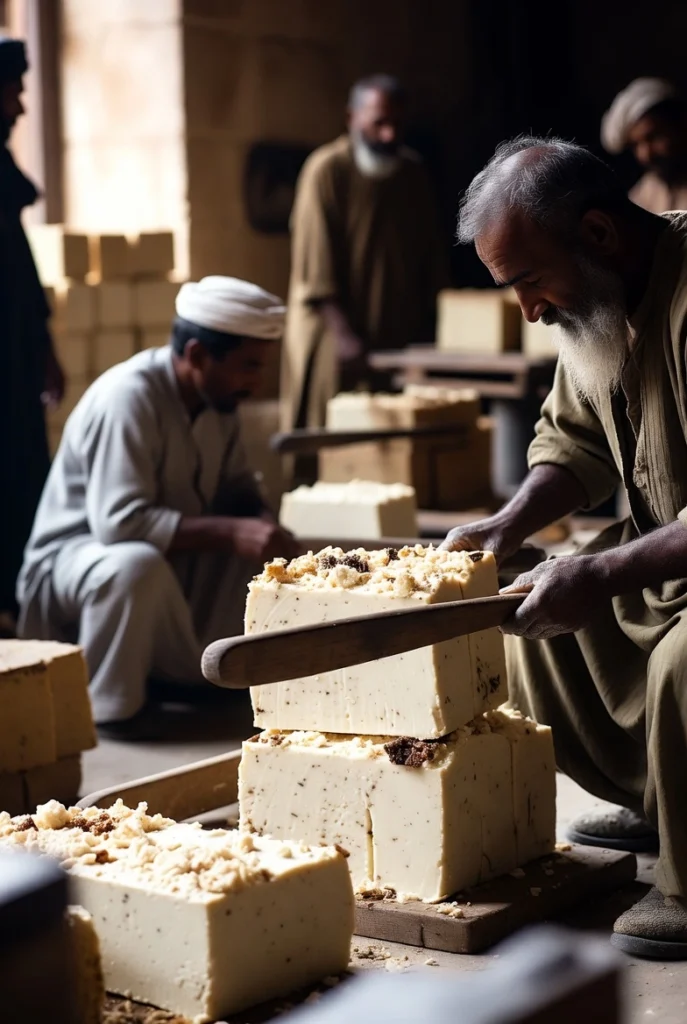
- It is manually leveled, then cut using body weight or wooden tools
- Each bar is stamped by hand
This is not “handmade” as a marketing term—this is labor-intensive production with no shortcuts.
Aging: Where Time Becomes Quality
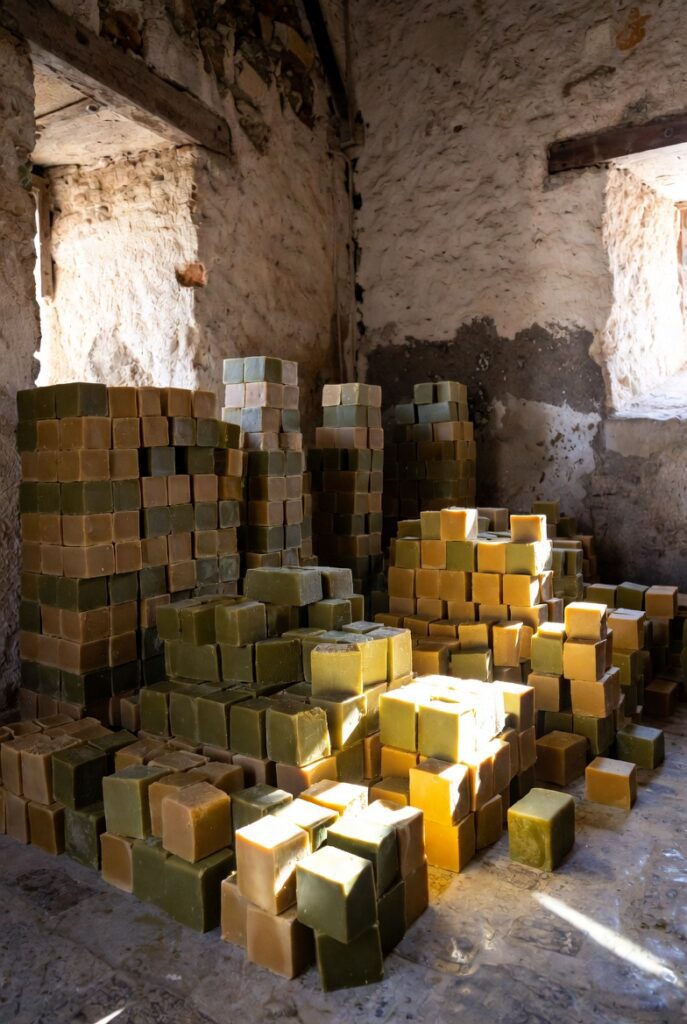
After cutting, the soap is not ready.
- It is stacked in ventilated chambers
- Left to age between 6 to 12 months
- Color transforms from deep green → golden-brown
- Internal moisture decreases while hardness and mildness increase
If a product skips this phase, it is not traditional Aleppo soap—no matter what the label claims.
From Aleppo to Europe: The transfer of knowledge through cultural exchange
Through trade routes and the Crusades, soap-making knowledge moved from the Levant into Europe.
What Europeans did next:
- Adopted the base method
- Modified ingredients based on local availability
- Developed:
- Marseille soap (France)
- Castile soap (Spain)
Important distinction:
These were adaptations—not independent inventions.
A Personal Note from a Family That Lived the Tradition
For generations, my family has been part of this craft in Aleppo. We have stood over boiling vats in winter, watching olive and laurel oil transform under heat and time.
We have seen the soap laid out across large floors, cut manually, and stamped one piece at a time—exactly as it was done decades ago.
This is not abstract history to us.
It is a system that survived:
- War
- Economic collapse
- The near disappearance of the industry
Today, continuing this work is not just about pride—it is a burden.
You are trying to preserve something slow, expensive, and rigid in a world that rewards speed, scale, and cheap alternatives.
Scientific Reality: Why This Soap Worked Long Before Science Explained It
Modern chemistry only confirmed what craftsmen already knew.
Laurel oil contains:
- Cineole (volatile oil)
- Phenolic compounds
- Flavonoids (antioxidants)
These explain:
- Antibacterial and antifungal properties
- Suitability for chronic skin conditions
- Scalp and hair benefits
This was not discovered in labs first—it was discovered through repeated human use.
UNESCO Recognition: Too Late or Just in Time?
In December 2024, the craftsmanship of Aleppo laurel soap was officially inscribed by UNESCO as intangible cultural heritage.
This acknowledges:
- The technique
- The cultural identity
- The historical continuity
But recognition does not rebuild an industry—it only documents its importance.
Why Didn’t It Become a Global Industry? (The Uncomfortable Answer)
This is where most narratives become dishonest. Let’s be direct.
The real reasons:
- War and political instability
Since 2011, the Syrian conflict destroyed factories and reduced producers in Aleppo to roughly 15 families - High cost of laurel oil
Scaling production is expensive by default - Resistance to industrialization
Traditional methods do not scale easily without losing authenticity - Competition from industrial and fake products
Cheap imitations dominate the market
This is not a failure of the product.
It is a collision between tradition and modern economics.
What This Means Historically
Aleppo soap represents something rare:
- A pre-industrial system that survived into the modern age
- A case where knowledge spread globally, but origin remained local
- A tradition that refused to adapt fully—and paid the price for it
History here is not just about invention.
It is about survival under pressure.
Conclusion: A Legacy That Refuses to Disappear
Aleppo laurel soap is not a forgotten artifact—it is an active contradiction.
It proves that:
- Longevity does not guarantee dominance
- Authenticity does not guarantee success
- And tradition, without adaptation, becomes fragile
The real question is no longer about its past.
It is this:
Can a slow, precise, and expensive craft survive in a world built on speed and scale—or will it remain preserved… but irrelevant?
Frequently Asked Questions about Aleppo Laurel Soap ❓
Aleppo laurel soap stands out because it combines a simple yet precise traditional recipe — olive oil as the base and laurel oil (typically 20–30% in high-quality versions) — with a labor-intensive hot process and long natural aging period. Unlike most modern soaps, it contains no synthetic additives, fragrances, or preservatives, and its production method has remained largely unchanged for centuries.
The extended aging process is essential. It allows excess moisture to evaporate, making the soap harder, milder on the skin, and longer-lasting. During this time, the color shifts from deep green to a characteristic golden-brown — a visual sign that the saponification process has fully stabilized and the soap has matured.
Look for several indicators: a firm, dense texture, a subtle natural herbal scent (not overpowering perfume), a clear producer’s stamp, and a high laurel oil content (usually 20% or more). Be cautious of cheap “Aleppo-style” soaps that are mass-produced, artificially colored, or contain very little laurel oil. True Aleppo soap is expensive for a reason.
This is one of the most important questions. The main barriers are the high cost and limited availability of quality laurel oil, the difficulty of scaling the traditional hot-process method without losing authenticity, repeated political instability and war in Syria (which drastically reduced the number of producers), and intense competition from cheap industrialized soaps. Tradition, in this case, came at the expense of scalability.
Modern research confirms what traditional makers observed long ago. Laurel oil contains cineole, phenolic compounds, and flavonoids that give it antibacterial, antifungal, and antioxidant properties. It has been studied for its potential benefits on sensitive skin, certain scalp conditions, and mild antimicrobial effects. However, it is not a medicine, and results vary from person to person.
The conflict severely damaged the industry. Many traditional workshops were destroyed or forced to close, and the number of families still producing authentic Aleppo soap in the city dropped dramatically — to roughly 15 families according to recent reports. UNESCO recognition in 2024 came as both an honor and a call to help preserve what remains.
Yes, it is suitable for most skin types, especially sensitive or dry skin. However, first-time users should note that it produces less lather than commercial soaps and may feel different in texture and cleansing speed. Many people find it gentler and more nourishing once they adapt to its natural character.
📚 References & Resources
Official & Heritage Documentation
- UNESCO – Representative List of the Intangible Cultural Heritage of Humanity: Craftsmanship of Aleppo Ghar Soap – Official inscription of the craft in December 2024, with historical context and cultural significance.
Historical Records & Cultural Context
- Wikipedia: Aleppo Soap – Overview – Reliable summary referencing multiple historical and academic sources on the soap’s development and traditional methods.
- SoapHistory.net: History of Aleppo Soap – Detailed historical background on origins, influences on European soap-making, and evolution over time.
Journalistic & Analytical Reports
- Al‑Monitor (AFP report): UNESCO grants heritage status to Aleppo soap – News coverage discussing UNESCO recognition, historical depth, and modern challenges facing producers.
- AD Middle East: Behind the Making of UNESCO‑recognised Aleppo Soap – In‑depth feature exploring production practices and the cultural resilience behind the craft.
Botanical & Scientific Context (External Sources)
- Journal of Ethnopharmacology (example research – access via academic database): Studies on laurel oil chemical properties – Peer‑reviewed research on the compounds found in laurel oil and their biological effects (antibacterial/antioxidant). *Accessible via academic libraries or journal subscriptions.*
- National Library of Medicine (PubMed) – search result: Laurel oil and skin health studies – Scientific studies on topical effects of laurel oil on skin conditions and antimicrobial action.