Useful Summary
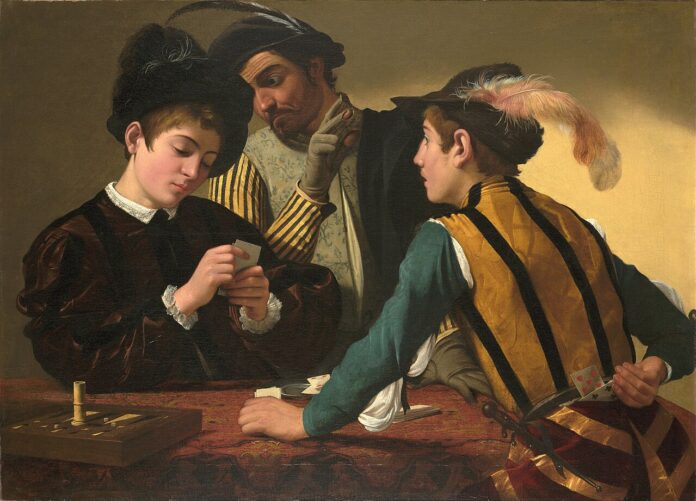
The painting “The Cardsharps” by the Italian artist Caravaggio is more than a simple gambling scene. Created in late 16th-century Rome, the artwork captures a moment of deception where a young aristocrat believes he is winning a card game while two experienced gamblers secretly cheat him. Through dramatic realism and striking detail, Caravaggio transforms an ordinary scene into a powerful story about trust, manipulation, and survival.
Inside the Scene: A Game Already Lost
At first glance the scene seems calm. Three young men sit around a table playing cards.
The elegant young nobleman:
- Wears luxurious black velvet clothing
- Carefully studies his cards
- Appears confident that luck is on his side
But the viewer quickly realizes something the nobleman does not: he is being cheated.
Caravaggio invites us to witness a hidden theft happening in plain sight.
How the Trick Works
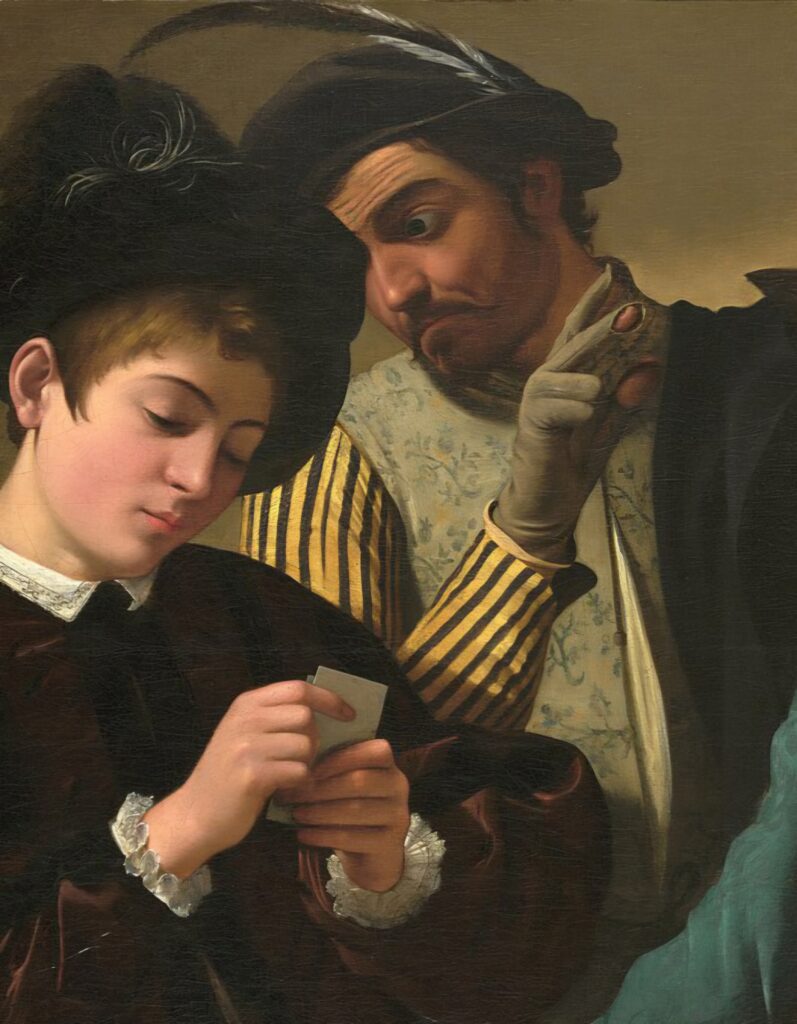
The two gamblers operate as a team.
The man in the middle acts like a human radar:
- He secretly looks at the nobleman’s cards
- His gloves have cut fingertips allowing him to feel secret marks on the cards
- He signals his partner with subtle gestures
The young man on the right looks innocent but is actually a skilled cheat.
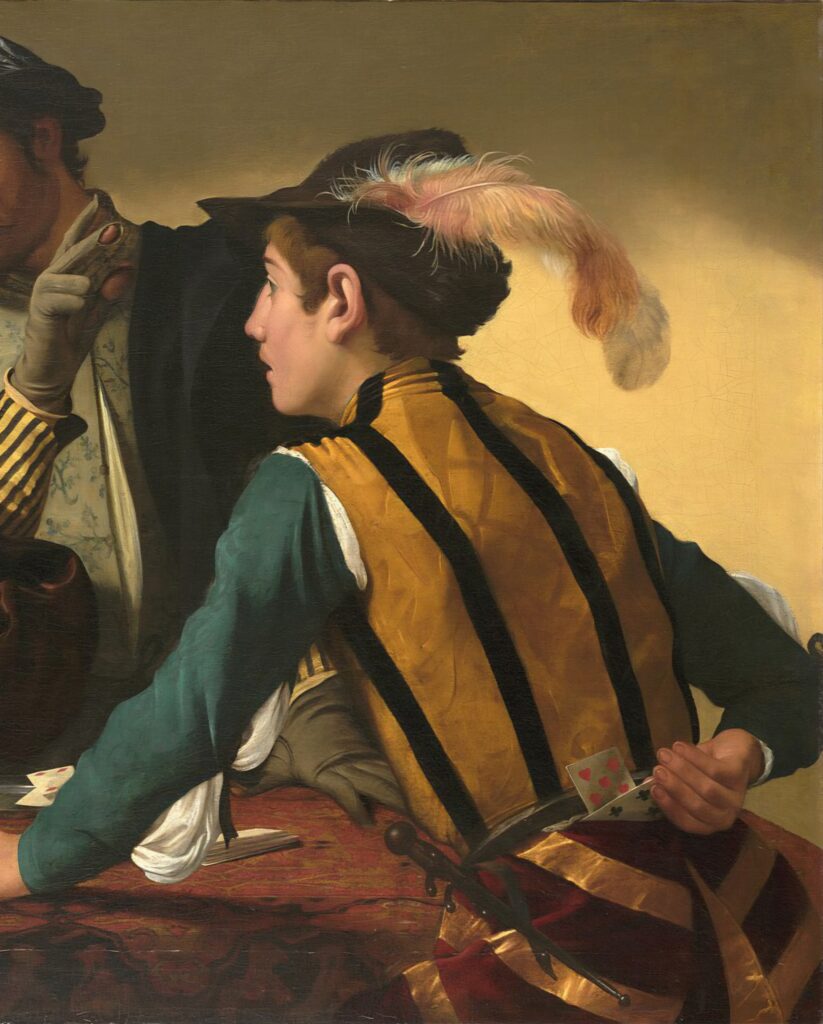
He:
- Hides extra cards behind his back
- Pulls them from his belt when needed
- Leans forward as if preparing to strike or escape
The result is inevitable: the aristocrat has already lost, even if he does not know it yet.
Caravaggio’s Revolutionary Realism
Caravaggio became famous for rejecting the idealized style that dominated European art. Instead of painting perfect heroes, he portrayed ordinary people with striking realism.
In this painting we can observe:
- incredibly detailed fabric textures
- worn gloves and creased clothing
- natural lighting that reveals every detail
- expressive body language
The feather in the cheater’s hat appears almost real, while the folds of clothing follow the natural movement of the body. This realism makes the viewer feel as if they are standing inside the room.
What Does This Mean for the Modern Viewer?
Although the painting is more than four centuries old, its message still feels modern.
The scene reminds us that:
- appearances can be misleading
- confidence does not always mean control
- deception often works through cooperation
In today’s world, the painting reflects a simple truth: the most effective scams often happen openly while the victim remains unaware.
Historical Context: The Rise of Caravaggio
The Cardsharps was painted during the early stage of Caravaggio’s career in Rome.
At that time:
- most paintings focused on religious or mythological subjects
- everyday life was rarely portrayed with honesty
Caravaggio broke these traditions by depicting gamblers, street characters, and ordinary people. His dramatic realism helped shape the Baroque art movement and influenced many European painters.
Why the Painting Still Fascinates Viewers
Several elements make this artwork unforgettable:
- a clear dramatic story
- psychological tension between the characters
- remarkable visual realism
- the viewer understanding the deception before the victim does
This creates a powerful sense of dramatic irony.
Conclusion
More than four hundred years after it was painted, The Cardsharps continues to capture attention. It is not just a scene of gambling but a reflection of human nature.
Through a single moment at a card table, Caravaggio reveals themes of trust, deception, and survival—subjects that remain relevant in every era.